
"high flavor"
60000 article(s) found

The relationship between altitude and coffee flavor, why the coffee flavor in high-altitude coffee producing areas
The tropical region between the Tropic of Cancer and Tropic of Cancer produces the world's truly high-quality Arabica coffee in Central and South America, South Asia and some Pacific islands, central and southern Africa is also the most important coffee growing area in the world. 3000-6000 feet (2000 meters) high altitude provides ideal conditions for coffee growth: an average frost-free climate of 60-70 degrees Fahrenheit (15-21) throughout the year.

The relationship between the growth altitude of coffee and the flavor of coffee
Professional coffee knowledge exchange more coffee bean information Please pay attention to the relationship between coffee growth altitude and coffee flavor in coffee workshop (Wechat official account cafe_style) Coffee raw beans are generally graded according to raw bean size, defect rate and altitude. The size and defect rate of raw beans are easy to understand, and many people do not quite understand why some producing areas should be graded according to the altitude at which coffee beans grow.

Is high altitude coffee better than low altitude coffee? How does altitude affect coffee and its flavor?
Have you ever asked the barista about the coffee you drank? Baristas may answer you in incomprehensible ways, such as the altitude at which coffee is grown. This makes people wonder, does the coffee we drink have anything to do with the planting height? Why is this important? It is not without reason that the flavor of high-altitude coffee is outstanding. Dr. Yili, a world-renowned coffee scientist, once proposed this.

The relationship between the altitude of coffee growth and the flavor of coffee? What are the advantages of high altitude?
Professional coffee knowledge exchange more coffee bean information please pay attention to the coffee workshop (Wechat official account cafe_style) coffee growth altitude and coffee flavor relationship? What are the advantages of high altitude? Coffee beans are generally graded according to their size, defect rate and altitude. The size and defect rate of raw beans are easy to understand, but many people don't quite understand. Why do some producing areas use coffee?

Effects of humidity, temperature and soil of planting environment on flavor quality of coffee beans
What is the effect of soil and moisture on the flavor of coffee? When we tested the coffee, we found that there is a phenomenon that the coffee grown in volcanic rock is the most balanced in terms of acidity, bitterness, mellow and flavor, so it is rich in taste. Some studies have found that this is because volcanic rocks contain high concentrations of sulfur and sulfides, which are necessary for the synthesis of some aromatics. Therefore, species

Flavor Guide to Coffee Origin: Africa, Asia, America
Finely speaking, the flavor of each type of coffee bean is different, even with each handshake and each Italian extraction, because of the changes in the environment, man-made and the bean itself. But we always say that Ethiopian beans have citrus fruit flavors and delicate floral scents, while Kenyan beans have bright acidity and dry blabla. The former is different.

Premium Java beans, high quality Arabica coffee, Java coffee, Asian flavor coffee.
Java produces a lot of coffee, but it is a pity that at present, most of them are robusta species with poor flavor, and there are few high-quality Arabica beans left. this is because a coffee disaster in the 1970s caused coffee farmers to abandon the high-quality but delicate Arabica. Robsta, which is high-yield, easy to take care of but low-quality, only a few government-owned estates still produce high-quality products.

What are the advantages of high-altitude coffee beans? what's the difference in flavor?
What are the benefits of high-altitude coffee beans? what are the differences in flavor? 3000-6000 feet about 1000 meters to 2000 meters high altitude provides ideal conditions for coffee growth: an average annual frost-free climate of 60-70 degrees Fahrenheit, about 80 inches of moderate rainfall, and abundant sunshine. Coffee beans grow slowly in cold mountain areas, but the slow ripening process makes the sugar content of coffee beans.

What are the advantages of high-altitude coffee beans? what are the differences in the flavor of different varieties of coffee beans at different elevations?
Introduction of high-altitude coffee varieties generally speaking, with the increase of altitude, the aroma of coffee will become more prominent and unique (see figure). From the temperature and sweetness of Brazilian beans at 3500 feet to the soaring taste of Ethiopian coffee beans above 6000 feet, altitude will give coffee beans a more complex and subtle taste. Coffee beans grown at high elevations are hard.
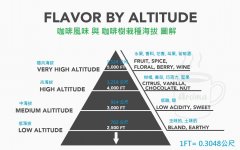
Illustrating the effect of coffee tree planting altitude on coffee flavor why high-quality coffee beans are at high altitude
Professional baristas Please follow the Coffee Workshop (official Wechat account cafe_style) when it comes to the growing conditions for good coffee, high altitude is often mentioned. Simply looking at the picture only helps to understand that coffee beans grown at high altitude can show more good taste after proper roasting. As for why there are these differences? Take a look at the following analysis. Coffee flavor by altitude

Why do coffee beans taste better in high altitude areas? Altitude and Flavor of Fine Coffee Bean producing area
Why do coffee beans taste better in high altitude areas? Through the continuous research of coffee seniors, it is found that under the condition of the same gene of coffee beans, the flavor of coffee beans planted in high-altitude producing areas is better. I wonder if there are any former rural friends, have you ever known that apples, cantaloupes, grapes and other fruits are especially sweet in areas with large temperature differences between day and night? Coffee

Introduction to the varieties produced by the method of describing the taste and flavor of high-quality coffee beans in Honduras
Taste and flavor description of Honduran boutique coffee beans variety introduction of Honduran coffee has a rich and mellow taste, taste is not astringent but not sour, mellow and aroma are very high, quite individual. Honduran coffee can lead to multiple levels of flavor depending on the degree of roasting. Medium baking maximizes the sweetness of beans, while deep baking makes it bitter.

High-altitude very hard bean boutique coffee with unique flavor in Vivetnam fruit producing area of Guatemala
Boutique coffee is fresh coffee. Whether it's food or drink, of course, the fresh the better, and so is boutique coffee. High-quality coffee should keep the coffee beans fresh before making, including the preservation of baked beans, and grind the coffee beans into powder before making, which is also to retain its original and best flavor. And the way of making hand-made coffee is such a way to make high-quality coffee.

Introduction to the planting environment for describing the flavor of coffee at high and low altitude
Coffee altitude high and low flavor description planting environment introduction Yunnan coffee growing area frost disaster once again verified my theory, the highest altitude planting area is almost not affected by frost, while in some low-lying areas in fact, the world's best Blue Mountain coffee is planted in the altitude range of 1500-2100 meters, coffee people who can test coffee cups have a common recognition.

Blue Mountain-flavored imported coffee beans mixed with espresso concentrate
Select imported high-quality raw beans, local fresh baking, the perfect proportion of strict matching, the quality is comparable to the Jamaican Blue Mountain coffee! Without high price, you can easily enjoy the mellow flavor of high-quality and high-reduction Jamaican Blue Mountain coffee. Ultra-high cost performance! Deep baking, balanced taste, fragrant, smooth, full-bodied and mellow taste. The launch of Blue Mountain

Why does the flavor of hand-brewed coffee change with temperature? the best drinking temperature and time for hand-brewed coffee
"tasting coffee needs to go from hot to cold." I wonder if you have ever heard similar expressions. Coffee needs to be tasted at a high temperature, but don't rush to finish it. As time goes on, the coffee temperature drops slowly, and then you taste the flavor of the coffee. Is that so? As a matter of fact, such an appraiser

Flavor description of high quality Honduran coffee beans treated by washing
The flavor of high-quality Honduran coffee beans treated by washing describes that the particles of Honduran coffee beans are large in shape, uniform in size and uniform in color. In order to facilitate harvesting, farmers will prune the coffee trees to no more than 150 centimeters, because if they grow too high, they must set up ladders to pick, which is not only time-consuming, but also may hurt the trees in Latin America by bending branches.

Description of roasting degree and Flavor of Coffee from different producing areas
Description of roasting degree and flavor of coffee from different areas Barahona is a place name in southern Dominica where high-quality coffee beans are produced. Beans are large beans with high maturity and balanced water content. The taste is well balanced and the palate is mild and smooth. The sour taste is not as high as Panamanian coffee beans, but it has mellow thickness. It's hard to buy pure raw beans. Maybe it's because of the market circulation.

The relationship between the growth altitude of Coffee planting and the Flavor of Coffee
Professional coffee knowledge exchange more coffee bean information please follow the coffee workshop (Wechat official account cafe_style) A coffee tree bears fruit several times a year. Raw beans are generally graded according to their size, defect rate, and altitude. The size and defect rate of raw beans are easy to understand, and many people do not quite understand why some producing areas are graded according to the altitude at which coffee beans grow.

Introduction of coffee beans and some boutique coffee in the main producing areas of coffee beans in the world (2)
Introduction of coffee beans and some boutique coffee in the main coffee producing areas of the world: central America